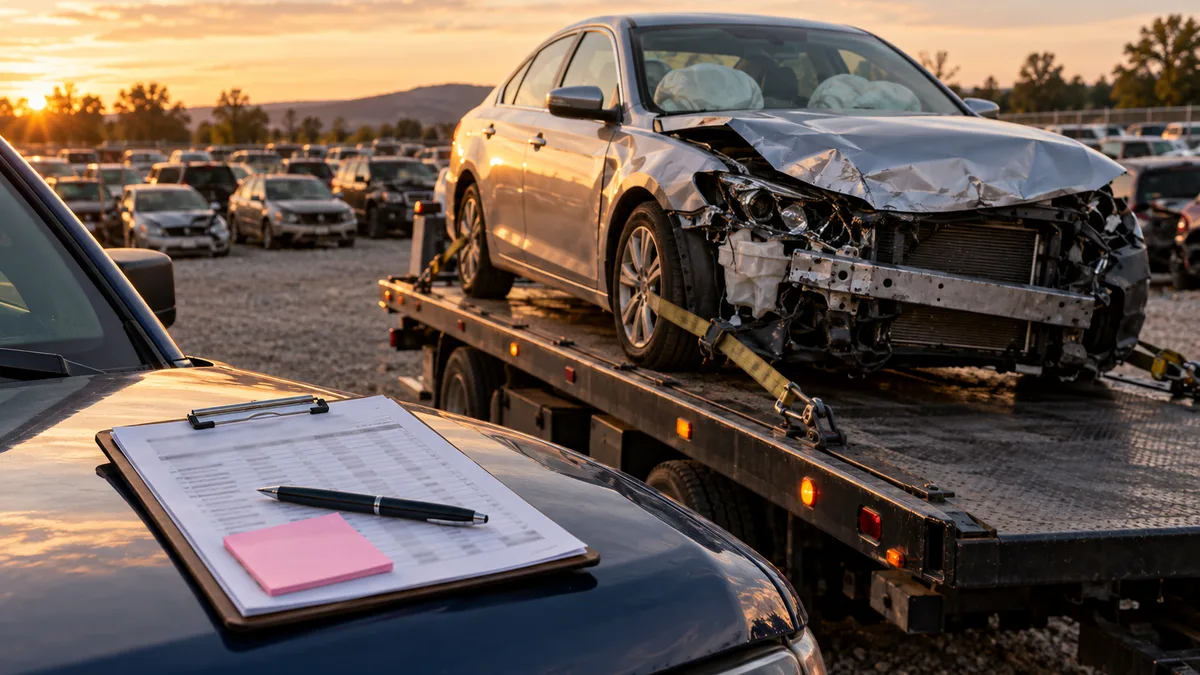
A driver paid $44,000 for a car. It had 5,500 miles on it. They still owed $39,000 on the loan when it got totaled.
The insurance company's offer came back around $36,000.
That same week, other drivers posted the same story with different numbers. A non-fault total valued at $17,200 when a replacement cost $26,000. A 2014 sedan valued at about $6,000 when similar cars were listed for around $15,000. And one owner who went through every line of the valuation report, found the mistakes, and got the offer raised by more than $5,000.
That last one is the reason for this post.
Short answer: On a totaled car, the insurance company owes you actual cash value, which is what a comparable car would cost to buy in your area right before the wreck. It does not owe you what you paid or what you still owe. The first offer comes from a valuation report, and those reports have errors you can find. Ask for the report, check every line, find your own comparable cars, and push back in writing.
What does actual cash value mean on a totaled car?
Actual cash value (ACV) is the market value of your car, in its condition, on the day before the loss. Your deductible comes off that number.
In Georgia, the insurance regulation on total loss claims spells out how an insurer that pays cash has to get there. The comparable cars should be the same make, same model year, similar body style, and have similar options and mileage. They should come from the local market, which the rule defines as within 50 miles of the county seat where the car was kept, and they should be cars that are for sale now or were available in the last 30 days. If there aren't enough comparables locally, the insurer can widen to 100 miles, then to dealer quotes.
The same rule says the settlement includes the taxes, license fees and other fees to transfer ownership of a comparable car. More on that below, because it's money people leave on the table.
In Alabama and Tennessee, your policy wording and each state's claim rules control. The question to ask is the same: does the number reflect what it costs to buy a similar car near you? If the comps in your report don't look like that, you have something to argue with.
Why is the offer less than what I paid?
Because the purchase price includes things ACV doesn't.
- Dealer markup. What you paid on the lot and what the same car sells for used are two different numbers, even at 5,500 miles.
- Add-ons you financed. Service contracts, gap, paint protection, tire and wheel plans. Those are in your loan, but they aren't part of the car's value.
- Negative equity. If you rolled the balance from your last car into this loan, you owe money on a car you don't even have anymore.
- Depreciation. The car started losing value the day you drove it home.
Example: You paid $44,000 out the door. You owe $39,000. The report says ACV is $36,000 and your collision deductible is $1,000. The insurer pays $35,000, and with a loan on the car, that money goes to your lender first (here's why lenders end up on claim checks). You're $4,000 short on the loan and you have no car. That $4,000 is the gap, and it's why gap coverage exists.
Some of that shortfall is real depreciation and nobody owes it to you. Some of it may be errors in the report. Your job is to find the second kind.
How do I get the valuation report?
Ask the adjuster for the full valuation report in writing. Email is fine. Ask for every page, including the list of comparable vehicles and every adjustment.
Most insurers use a third-party valuation company to build these reports. You're entitled to see how they got the number. If the adjuster only gives you a total over the phone, don't negotiate against a total. Get the report.
How to read a total loss valuation report
Go through it with a pen. These are the places I'd look first.
1. Your car's description
Check the VIN, year, trim level, engine, drivetrain, and every option. The single most common big miss is the wrong trim. A base model and a top trim of the same car can be thousands of dollars apart. Sunroof, leather, a towing package, a premium sound system, upgraded wheels, driver assist packages: if your car had it and the report doesn't list it, write it down.
Aftermarket add-ons you put on later (a lift kit, custom wheels, an upgraded stereo) are a separate bucket. On some auto policies, those are capped at $1,000 total for any one loss unless they're listed on your declarations page. If you've spent real money customizing a car, ask your agent how it's covered before you need it.
Find your window sticker if you still have it. If you don't, many manufacturers can pull a build sheet from the VIN, and your purchase paperwork usually lists the trim.
2. Mileage
Make sure the mileage on the report matches the odometer. Then look at the mileage adjustment on each comparable. A comp with 40,000 more miles than your car should be adjusted up to match yours. Check that the direction and size of each adjustment make sense.
3. The comparable vehicles
This is where most of the money is. For each comp, check:
- Is it the same year, make, model and trim?
- How far away is it? In Georgia, look for the 50-mile local market first.
- Is it a real listing you can find? Look up the VIN or dealer if the report lists one.
- Does it have a branded title, prior damage, or a much higher mileage?
- Is it a private-party sale price or a dealer price?
One bad comp can drag the average down by a lot. If three comps are fine and one is a different trim 90 miles away, say so.
4. Condition adjustments
Reports often rate the interior, exterior, tires and mechanical condition, then deduct for anything below "typical." If your car was clean, prove it. Photos from before the wreck, recent tire receipts, maintenance records, a new battery, new brakes. A $600 deduction for "worn tires" on tires you bought 4 months ago is worth an email.
5. Price adjustments on the comps
Some reports subtract a percentage from dealer asking prices to estimate what the car would actually sell for after negotiation. Ask the adjuster how that number was calculated and whether it's supported for your market. If the report knocks thousands off listed prices that local dealers aren't discounting, push on it.
6. Prior damage and unrelated deductions
A deduction for prior damage should be for damage that existed before this wreck and lowered the value. If it's damage from this accident, it shouldn't be there.
7. Taxes and fees
Look for a line for sales tax, title and registration. If it's missing, ask why.
Are taxes and fees included in a total loss settlement?
In Georgia, yes, on a cash settlement. The state's total loss rule says the settlement includes all applicable taxes, license fees and other fees to transfer ownership of a comparable car, limited to what would have been paid on your car at the time of settlement. In 2022, the Georgia Insurance Commissioner issued a directive saying insurers using the cash method must calculate the actual taxes the insured will be required to pay, based on the agreed value of the car.
So if your agreed value goes up after you push back, the tax amount should go up with it. Check that it did.
Alabama and Tennessee have similar rules. Both states' claim settlement regulations say a cash settlement for a total loss includes all applicable taxes, license fees and other fees to transfer ownership of a comparable car. Ask the adjuster in writing how those were figured in your offer, and get the answer on paper.
How do I find my own comparable cars?
Build a short list that looks like what the report should have used. Here's how I'd do it:
- Search dealer listings within about 50 miles of where you live for the same year, make, model and trim.
- Keep mileage close to yours. Within 10,000 to 15,000 miles is a good target.
- Skip salvage, rebuilt or flood titles, and skip anything with obvious damage.
- Save each listing as a screenshot or PDF with the date, price, mileage, VIN and dealer name showing. Listings disappear fast.
- Get at least 3. Five is better.
- Average them and compare that number to the report.
You're showing the adjuster what it costs to buy your car again near you. Specific listings with VINs carry more weight than "I think it's worth more."
How do I push back on a lowball total loss offer?
In writing, specific, and calm. The owner who raised their offer by more than $5,000 didn't argue about feelings. They found the errors and listed them.
Here's the shape of the email I'd send:
Claim number: ______. I've reviewed the valuation report dated ______ and I don't agree with the value. Specific issues:
1. Trim is listed as ______. My car is a ______ (window sticker attached).
2. These options are missing: ______.
3. Comparable #3 is a different trim and is 92 miles away. Comparable #4 has a rebuilt title.
4. Condition deduction for tires: tires were replaced on ______ (receipt attached).
5. Attached are 5 comparable listings within 50 miles, averaging $______.
Please send a revised valuation, confirm that taxes and fees are included and how they were calculated, and let me know the next step if we still disagree.
Keep everything in one email thread. Write down the date and name for every phone call. If the adjuster revises the number, ask for the revised report too.
What if the insurance company still won't move?
You have a few options.
Appraisal, if your policy has it
Many auto policies have an appraisal clause for disputes over the amount of a loss. Each side picks and pays its own appraiser. The two appraisers choose an umpire, and the cost of the umpire is usually split. When any two of the three agree, that sets the amount. Appraisal settles the dollar figure only. It doesn't decide whether something is covered.
Read your policy for the exact wording, because not every policy has this and the terms vary. On some policies, appraisal happens only if you and the insurer both agree to it. Neither side can force it. Once both agree, each side names its appraiser in writing within 30 days. Appraisal costs money, so it makes the most sense when the gap is a few thousand dollars or more.
A complaint with your state insurance department
If the insurer isn't responding or isn't explaining its number, the state can help.
- Georgia: Office of Insurance and Safety Fire Commissioner, Consumer Services, (800) 656-2298 or (404) 656-2070.
- Alabama: Department of Insurance, 334-241-4141. They ask that you contact the insurer first, and they can't assist if you already have an attorney.
- Tennessee: Department of Commerce and Insurance, Consumer Insurance Services, 615-741-2218 or 1-800-342-4029. Formal complaints are filed online.
A lawyer
For a large gap, an injury claim, or an insurer that won't explain itself, talk to a lawyer licensed in your state. I'm not one, and this isn't legal advice.
Watch the clock while you negotiate. Policies set a deadline for suing your own insurer over a car damage claim. On some policies, it's 2 years from the date of the accident. Check yours.
What happens if I owe more on my loan than the car is worth?
The insurer pays the ACV, minus your deductible, and the lienholder gets paid first. If the loan balance is higher, you still owe the difference unless you have something that covers it.
- Gap coverage pays the difference between the ACV settlement and what you owe on the loan, within its terms. It might have been sold by the dealer or lender, or it might be on your auto policy. If it came from the dealer, call the gap administrator right away and ask what they need. Many gap contracts exclude negative equity rolled in from a prior car, late fees, and add-ons, and some don't cover your deductible.
- Loan or lease payoff coverage is offered on some auto policies. It works like gap but is often capped at a percentage of the car's value. Check your declarations page for it.
- Refunds on add-ons. If you financed a service contract or other cancelable products, ask the dealer or the company that issued them about a prorated refund. That money usually goes toward the loan.
If you're financing or leasing a newer car today, ask your agent whether gap or loan payoff is on your policy. It's one of the cheapest lines on an auto policy and one of the most painful to be missing.
What if the other driver caused the wreck?
You can file with the at-fault driver's insurance (a third-party claim) or with your own collision coverage (a first-party claim).
- Through their insurer: no deductible, and you can claim rental or loss of use. They aren't your insurance company, though, so your policy's appraisal clause doesn't apply to them. They can also be slow while they work out fault.
- Through your own collision: usually faster. You pay your deductible up front, and your insurer goes after the other side to get its money back, including your deductible.
Either way, the same valuation work applies. Get the report and check the comps.
If the other driver had no insurance, or their insurer denies the claim, your uninsured motorist coverage matters a lot. In Georgia, UM can pay for damage to your car. Here's why UM is the coverage most people have and don't understand.
Can I keep my totaled car?
Often, yes. If you keep it, the insurer subtracts the salvage value from your payout. Ask what that salvage number is before you decide.
In Georgia, the state's form for owners who keep a total loss lays out the rules. The license plate has to come off right away. The car gets a salvage title, and you can't sell it until the salvage title is in your name. To drive it again, it has to be repaired, pass a state inspection, get a rebuilt title, and get a new plate. A rebuilt title lowers resale value for good.
Keeping it makes sense for an older car with mostly cosmetic damage that you plan to drive into the ground. For a newer car with a loan, it rarely does.
Step by step: your car was just totaled
- Take everything personal out of the car, plus any aftermarket parts you can document. Photos of the car, inside and out, if you can get to it.
- Ask the adjuster for the full valuation report in writing.
- Gather your window sticker or build sheet, purchase paperwork, maintenance and tire receipts.
- Check every line of the report: trim, options, mileage, each comp, each adjustment, taxes and fees.
- Pull 3 to 5 of your own comps within about 50 miles and save them with the date showing.
- Send one written dispute listing each error with proof attached.
- If you have a loan, call your lender and your gap provider the same week.
- If you're stuck, ask about appraisal and call your state insurance department.
- Don't sign the release or hand over the title until you agree with the number.
What to check on your auto policy before you need it
- Collision and comprehensive deductibles. Could you write that check tomorrow?
- Gap or loan payoff coverage if you owe close to, or more than, what the car is worth.
- Rental reimbursement, because total loss claims take time and you still need to get to work. On some base policies, transportation is paid only after the whole car is stolen ($30 a day, up to $900). A rental after a wreck is an add-on.
- Uninsured motorist coverage, and in Georgia, whether it includes damage to your car.
If somebody beat your renewal price recently, check whether one of these got dropped to do it. Here's what usually comes out.
Send me your dec page before the next wreck
I'll do a free Claim Ready Coverage Check on your auto policy. Send me your declarations page and I'll tell you, in plain English, what happens if your car gets totaled tomorrow: what you'd get, what you'd still owe, and whether you have gap, rental and UM where you need them.
Email it to michael@ins.insure, call 678-578-7009, or start a quote here. You can also read more about how we handle auto insurance.
Frequently asked questions
How does an insurance company value a totaled car?
The insurer pays actual cash value: what a comparable car would cost in your local market right before the loss, minus your deductible. Most insurers use a valuation report built from comparable vehicles with adjustments for mileage, options and condition. In Georgia, the comparables should be the same make and model year with similar options and mileage, from within 50 miles of the county seat where the car was kept.
Can I negotiate a total loss settlement?
Yes. Ask for the full valuation report in writing, check the trim, options, mileage, comparables and condition deductions, and send a written dispute listing each error with proof. Include 3 to 5 comparable listings from dealers near you with the date, price, mileage and VIN showing.
Does insurance pay sales tax on a totaled car in Georgia?
On a cash settlement, Georgia's total loss rule says the settlement includes applicable taxes, license fees and other fees to transfer ownership of a comparable car. A 2022 directive from the Georgia Insurance Commissioner says insurers must calculate the actual taxes based on the agreed value of the car. Check that the tax line goes up if your agreed value goes up.
What happens if I owe more on my car than the insurance pays?
The settlement goes to your lender first, and you still owe any remaining balance unless you have gap or loan payoff coverage. Gap pays the difference between the settlement and the loan balance within its terms, and many gap contracts exclude rolled-in negative equity and some fees. Ask about prorated refunds on canceled add-ons like service contracts.
What is the appraisal clause on an auto policy?
Many auto policies have an appraisal clause for disagreements over the amount of a loss. On some, either side can demand it; on others, both you and the insurer have to agree to it. Each side hires its own appraiser, the two pick an umpire, and any two of the three set the amount. It decides the dollar figure only, and you pay your own appraiser and usually half the umpire.
Can I keep my car if insurance totals it?
Often yes, and the insurer subtracts the salvage value from your payment. In Georgia you remove the plate, the car needs a salvage title before you can sell it, and it needs repairs, an inspection, a rebuilt title and a new plate before you can drive it again.
Should I file a total loss with my insurance or the other driver's?
If the other driver was at fault, you can use either. Their insurer pays with no deductible and owes you loss of use, but may move slowly while it decides fault. Your own collision coverage is usually faster; you pay your deductible and your insurer tries to recover it from the other side.
Sources
- Ga. Comp. R. & Regs. R. 120-2-52-.06, Total Loss Vehicle Claims (Cornell LII): Georgia's rule for cash settlements on total losses: comparable vehicles of the same make, model year, similar body style, options and mileage, from within 50 miles of the county seat (then 100 miles), available within the last 30 days, with applicable taxes, license and transfer fees included.
- Georgia OCI Directive 22-EX-2, calculation of taxes when auto insurers pay first-party claims: Effective April 1, 2022, insurers using the cash equivalent method must calculate the actual taxes the insured will be required to pay, based on the agreed cash value.
- Georgia Department of Revenue Form T-56, Notice to Vehicle Owner: Payment of a Total Loss Claim: Owner-retained total loss in Georgia: plate removed, salvage title required before sale, rebuilt title and inspection before the car can be driven.
- Goldberg Kohn: Appraisals, resolving disputes over valuing the amount of loss: How a typical appraisal provision works: each party picks and pays its appraiser, the appraisers pick an umpire whose cost is shared, any two agreeing set the amount, and appraisal addresses amount of loss only.
- Georgia Office of Insurance and Safety Fire Commissioner: report complaints: Consumer Services can help with claim handling complaints; (404) 656-2070 or (800) 656-2298.
- Alabama Department of Insurance: file a consumer complaint: Contact the insurer first; complaints online, by mail or at 334-241-4141; the department can't assist if you have an attorney.
- Tennessee Department of Commerce and Insurance: insurance complaint instructions: Contact the insurer first, call Consumer Insurance Services at 615-741-2218 or 1-800-342-4029, and file formal complaints online.
- Ala. Admin. Code r. 482-1-125-.08, standards for settlements applicable to automobile insurance (Cornell LII): A cash settlement for a total loss reflects the cost of a comparable car, including all applicable taxes, license fees and other fees incident to transfer of ownership.
- Tenn. Comp. R. & Regs. 0780-01-05-.09, standards for settlements applicable to automobile insurance (Cornell LII): A cash settlement for a total loss must reflect the cost of a comparable car, including all applicable taxes, license fees and other fees incident to transfer of evidence of ownership.