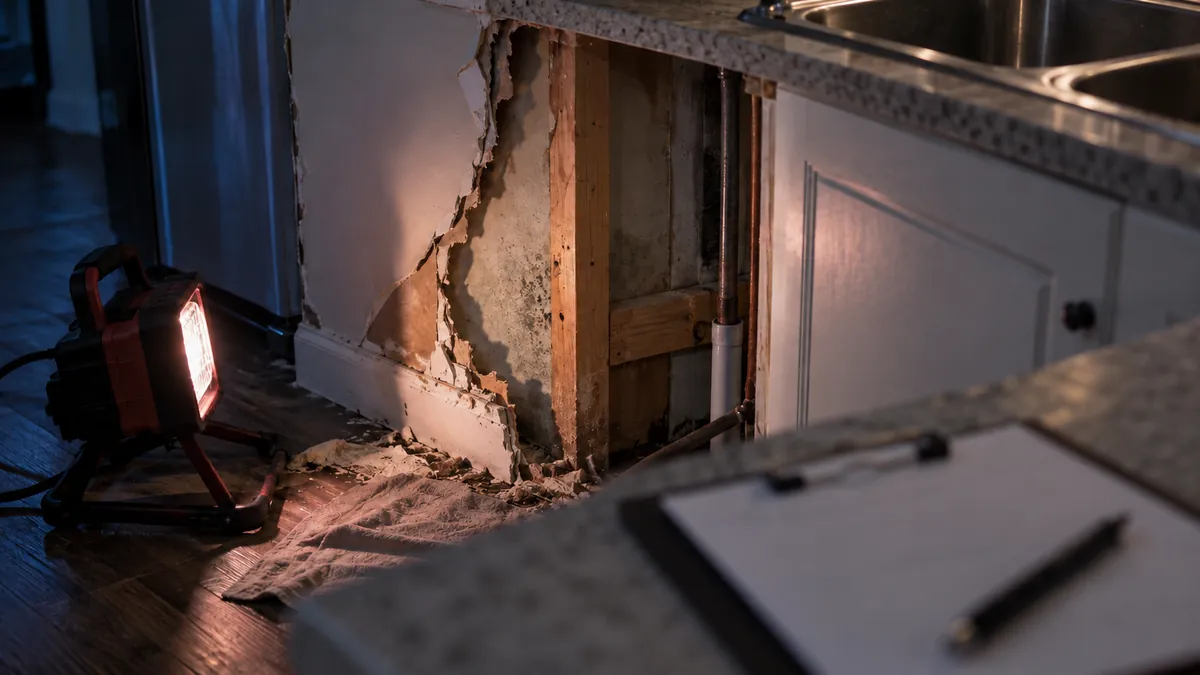
A homeowner's kitchen sink leaks in December. Water damage, some mold. They file a claim, the carrier pays out (up to the policy's limits) and a Home Depot install crew handles the repair. Case closed, or so they think.
Then July rolls around. The carrier sends a letter demanding documentation from a licensed mold remediation company, paperwork that was never part of the original estimate and never requested at the time of the claim. Now there's a nonrenewal threat sitting on top of a document deadline, for a claim that was already paid.
This one stings because the homeowner did everything that seemed reasonable. They still ended up blindsided.
The part of your policy nobody reads until they need it
Many homeowners policies cap mold at a fairly small sublimit. Water that backs up through a sewer, drain or septic line, or overflows a sump pump, is often covered only by an add-on with its own limit (often somewhere in the $5,000 to $10,000 range) unless you've specifically bought it up. A "paid claim" often just means the carrier paid out to that limit, not that they've signed off on the repair method or closed the file for good.
Two things catch people off guard:
A paid claim isn't necessarily a closed claim. Carriers can, and do, come back around later, especially with anything water or mold related, and especially around renewal time when they're re-underwriting the whole file.
A hardware-store repair isn't the same thing as documented, licensed remediation in a carrier's eyes. If mold touched the claim at all, general contractors and big-box install crews don't carry the same weight as a licensed mold remediation company when it comes to paperwork the carrier will accept.
What I want you doing differently
1. At the time of the claim, ask in writing exactly what documentation the carrier will want, now and later.
Don't assume "the check cleared" means the file is done. Get the requirements in writing before you pick a contractor.
2. If mold is anywhere in the claim, use a licensed remediation company, not a general contractor or an install crew, and keep every piece of paperwork forever.
Even if it wasn't required upfront, it's the difference between a smooth renewal and a scramble six months later.
3. Understand that a paid claim can still be a nonrenewal trigger down the road.
Ask your agent what your carrier's tolerance actually looks like for claims frequency and claim type before you're staring at a letter you didn't see coming.
The takeaway
The claim getting paid feels like the finish line. For the carrier, it's sometimes just the start of a longer file. Close the loop with real documentation while it's fresh, not when they come asking for it later.
Got an open or recent water claim and you're not 100% sure what your carrier's mold sublimit is or what they'll expect on paper? Ask me. I'll pull your policy and tell you exactly where you stand, before it turns into a nonrenewal letter.
Michael Gordy
INS. (In Noble Service)
Michael@ins.insure | 678-578-7009