Short answer
An aging roof is two problems, and buyers only ever get told about the first one.
The first is the replacement cost. That is a number you can budget for.
The second is insurability. Roof age decides whether a carrier will write the house at all, whether they can cancel you in your first 60 days after an inspection, and whether a hail claim settles at replacement cost or at a depreciated fraction of it. That second problem can cost more than the roof.
What your policy actually says
Carriers underwrite roofs by age and material, and the cutoffs are tighter than people expect. On a standard three-tab or architectural composition shingle roof, a lot of carriers stop writing new business somewhere between 15 and 20 years. Some will write it but settle roof claims at actual cash value instead of replacement cost. Some carriers stop paying replacement cost on a roof after 10 years. Some decline it and never explain why.
None of that is a Georgia rule. Every carrier files its own underwriting guidelines and they move. What was writable in 2023 may not be writable this year, and North Georgia's hail exposure is a big part of why.
So "the roof has 5 to 7 years left" and "a carrier will insure this roof" are two different findings. Your home inspector answers the first. Only an agent pulling real quotes answers the second.
The 60-day window nobody mentions
Under Georgia law, once a homeowners policy has been in force more than 60 days, the carrier can only cancel it for four reasons: nonpayment, fraud (including concealing a material fact or a material misrepresentation), a change in the risk that substantially increases a hazard the policy covers, or your violation of a material policy term. That is O.C.G.A. 33-24-46.
Inside the first 60 days, that protection does not apply yet. That window is the underwriting period, and it exists so the carrier can verify what it agreed to insure.
Two details people get wrong. The same four-reason limit applies from the effective date of a renewal policy, so no fresh 60-day window opens each year. And the statute covers policies insuring a natural person as the named insured, which matters if you are titling the house to an entity.
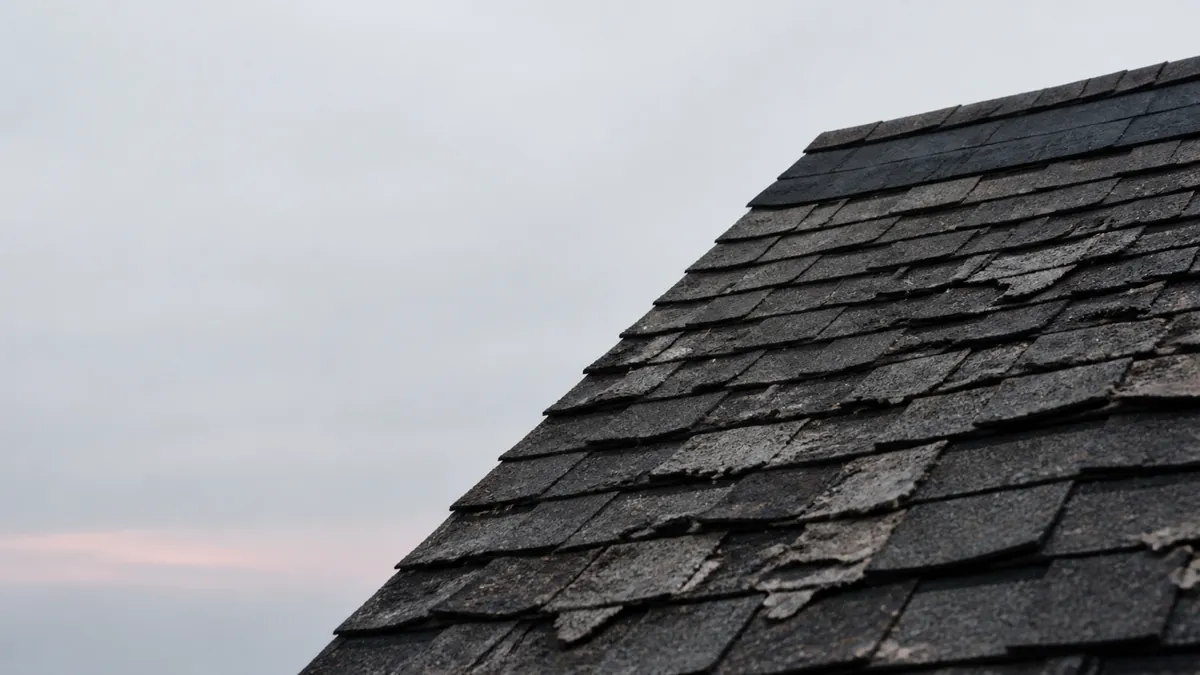
What it looks like in practice: you close, you move in, and in week 3 a contract inspector photographs the roof from the driveway or a drone. If it reads as worn, cupped, granule-bare, or patched, you can get a cancellation notice while you are still unpacking.
A new Georgia law, HB 1344, adds protection for owner-occupied homes for policies issued or renewed on or after January 1, 2027. If a cancellation or nonrenewal relies on drone or other aerial photos, the notice has to include the date-stamped images, taken within the past 12 months, and the repair standards that would reverse the decision. The carrier has to give you at least 60 days to fix the problem.
Now you are shopping with a cancellation on your record, on a house you already own, on a deadline set by your mortgage servicer. If you do not get coverage in place, the servicer force-places a policy. Force-placed insurance usually costs significantly more than a normal policy, and it protects the lender's interest in the building. It does not cover your belongings and it does not cover your liability.
At renewal the exposure is different, and Georgia limits it. A carrier can decline to renew with at least 60 days' written notice for policies issued or renewed on or after January 1, 2026. It was 30 days before that. The notice has to state the reason and tell you about the state's FAIR Plan. A carrier cannot nonrenew you for a change in its own underwriting rules unless the change covers a whole class or territory and the Commissioner approved it, and it cannot nonrenew over two or fewer claims in 36 months that were not your fault. What you can see at renewal is reduced coverage, like a roof that now settles at actual cash value, and the carrier has to give you notice of that change.
Replacement cost vs. actual cash value is a five-figure decision
Say you get a policy. There is still the question of how it pays when hail takes the roof out.
Replacement cost pays what it costs to put a new roof on, minus your deductible. Actual cash value pays the depreciated value of what you had.
Here is the arithmetic, and treat it as arithmetic rather than a promise. A home insured for $400,000 in Coverage A needs a $28,000 roof. The roof is 18 years old with a 25-year rating. The policy carries a 1% deductible, which on a $400,000 dwelling limit is $4,000.
On replacement cost, the covered amount is $28,000 less the $4,000 deductible. Worth knowing how that arrives: on many policies, replacement cost settles in two payments. The carrier sends the depreciated value first, then releases the held-back depreciation after the work is finished and you send the final invoice. You do not get one $24,000 check up front.
On actual cash value, the carrier depreciates first. Straight-line at 18 of 25 years leaves about 28% of value, which puts the covered amount near $7,800 before the deductible comes off, with no recoverable depreciation coming later. Same storm, same roof. Different policy language.
Real settlements rarely land on straight-line math. Carriers use their own depreciation schedules, some cap how far they will depreciate, and condition factors in. Some go further and use a roof surfacing payment schedule that pays a set percentage by age and material. Those schedules are printed in the policy and almost nobody reads them. The point of the illustration is the size of the gap, not the exact dollar.
One more thing your agent should tell you: an actual cash value roof settlement is a rate-reducing option. If one quote came in noticeably cheaper than the others, this is often why.
The Atlanta version of this problem
Hail history follows the address, not the owner. A house that took a hail claim two owners ago can still be harder to place. Ask your agent to pull the CLUE report on the property during due diligence, not after.
Roof age documentation is genuinely hard to get here. A lot of metro Atlanta roofs were replaced after storms by out-of-state contractors who are no longer in business. Permit records are your best fallback. Check the city first, because many metro Atlanta cities issue their own permits, then the county.
The 2019 to 2021 storm-replacement wave is coming due. A large number of homes on the market right now got roofs in that window, which is good news. The homes that did not get one then are the ones sitting at 18 to 22 years today, and they are the hard ones to write.
Three-tab versus architectural matters to underwriting. Some carriers have pulled back on three-tab shingles entirely, regardless of age. Find out which one you have before you assume age is the only question.
What to do before you close
- Get the roof's age in writing. Not "looks like it has some life." An actual year. Permit records, the prior owner's replacement invoice, or the roofer's warranty paperwork. Carriers ask for a year, and a guess creates a misrepresentation problem later.
- Quote it during due diligence, not after. Insurability belongs on the same checklist as the inspection and the appraisal. If you cannot get a quote you can live with, you want to know while you still have a way out.
- Ask your agent two specific questions. Will this carrier write this roof at this age. Is the roof settled at replacement cost or actual cash value. Write the answers down.
- Negotiate for the roof, not the credit. A seller credit hands you cash and leaves the underwriting problem in your lap. A seller who replaces the roof before closing fixes the claim math and the insurability problem at once.
- If actual cash value is your only option, price the gap. It is not automatically a dealbreaker. It is a number you should be able to say out loud before you sign.
- Photograph the roof at closing. Dated photos of its condition on day one are useful if an underwriting inspection later disagrees with you.
Questions people actually ask
How old is too old?
Depends on the carrier, and there is no single number. Older roofs get inspected when we write the policy. Some carriers stop paying replacement cost on a roof at 10 years, and a roof around 25 years old may be ineligible with just about any carrier. Material matters too. Metal and tile run on completely different clocks.
Can they really cancel me after I already closed?
Inside the first 60 days, yes, and roof condition found on an underwriting inspection is one of the ordinary reasons. After 60 days the four statutory reasons apply. Nonrenewal at the end of the term is a separate path, but Georgia limits the reasons a carrier can use. It takes 60 days' notice for policies issued or renewed on or after January 1, 2026.
Is an old roof a reason to walk from the house?
Usually not. A 12-year-old architectural roof with documented age, good attic ventilation, no prior hail claims and replacement cost available is not a crisis. Plenty of Georgia homes sell every week with a roof in the back half of its life. The failure mode is buying without knowing which policy you can get and how it pays.
Will the seller's current carrier just insure me too?
No. Their policy does not transfer, and their carrier may have written that roof years ago under guidelines that have since changed.
Does a new roof lower my premium?
Frequently yes, and it is worth calling your agent the week it is finished rather than waiting for renewal. Roof age is a rating factor at most carriers.
The next step
If you are under contract in Georgia and nobody has told you whether the roof is insurable, send us the address, the roof age, and the inspection report. We will run it and tell you what carriers will actually do with it, while you still have your due diligence period.
If you already own the house, send your declarations page instead and we will run a Claim Ready Coverage Check: whether your roof settles at replacement cost or actual cash value, where your limits are thin, and what it costs to fix. No pressure and no fake deadline. If your current policy is solid, we will tell you that and you can go about your day.
INS. | Alpharetta, GA | Licensed in GA, AL, TN, AR, TX
Sources
- Georgia Senate Bill 35 (2025), as passed: Raises the minimum nonrenewal notice on homeowners policies from 30 to 60 days for policies issued or renewed on or after January 1, 2026.
- Georgia Code section 33-24-46, cancellation or nonrenewal of certain property insurance policies (FindLaw copy): Lists the four reasons a policy in force more than 60 days can be cancelled and the reasons a carrier cannot use to nonrenew, including underwriting rule changes. The 30-day notice period shown there predates SB 35.
- Georgia Office of Insurance and Safety Fire Commissioner: Bulletin 24-EX-2, nonrenewal requirements and prohibitions: Lists the four reasons a residential policy can be cancelled after 60 days. Its 30-day nonrenewal notice figure predates SB 35.
- Georgia Rules and Regulations 120-2-15-.04, residential property cancellations and nonrenewals (Cornell LII): Requires cancellation and nonrenewal notices to be accompanied by the specific reasons and to tell the insured about the Georgia FAIR Plan.
- Georgia House Bill 1344 (2026), as passed: Adds Code section 33-9-45: notices that rely on aerial images must include the date-stamped images, repair standards, an appeal process and at least 60 days to cure. The bill makes it effective January 1, 2027.
- ISO Homeowners 3 Special Form HO 00 03 05 11, copy hosted by the Maine Bureau of Insurance: Standard form wording that pays no more than actual cash value until repair or replacement is complete. Carrier forms can differ.
- Triple-I: how your roof influences your home and business insurance: Says most insurers require an older roof to pass an inspection and some decline to write homes with older roofs.
- NAIC: lender-placed insurance: Says lender-placed premiums are significantly higher and the policies generally do not cover personal items or owner liability.